
End Overwhelm: How a Simple Daily Planner Can Transform Your Day
Ever feel like you’re constantly playing catch-up, drowning in a sea of to-dos, and ending each day more exhausted than when you started? It’s a common modern predicament. The demands of work, personal life, and constant digital pings can leave us feeling scattered, overwhelmed, and yearning for a reset button. What if I told you that a powerful reset mechanism isn't hidden in an expensive retreat or a complex productivity system, but in something as simple as a daily planner?
For many, the idea of a "daily planner" conjures images of rigid schedules and endless lists. But at its core, a daily planner is a tool for intentionality. It's about taking a few moments to pause, reflect, and proactively design your day, rather than letting your day design you. This simple act can transform chaos into clarity, stress into control, and endless tasks into manageable steps. Let’s explore how.
Why We Feel Overwhelmed: The Modern Predicament
Our brains are incredible, but they're not designed to hold an infinite number of open loops and competing priorities. In today's fast-paced world, we're bombarded with information, expectations, and distractions. This leads to:
Decision Fatigue: Too many choices about what to do next.
Context Switching: Jumping between tasks, reducing efficiency.
Lack of Clarity: Not knowing what truly matters amidst the noise.
Reactive Living: Constantly responding to external demands instead of pursuing our own goals.
This constant state of overwhelm leaves us feeling drained and unproductive. A daily planner offers a much-needed antidote.
The Magic of a Daily Planner: More Than Just a To-Do List
A daily planner is far more than a simple list of tasks. It's a strategic tool that empowers you to take control. Here's how it works its magic:
1. Crystal Clear Clarity and Focus
Before you even start tackling tasks, a planner forces you to identify what truly needs your attention. By writing things down, you externalize your thoughts, freeing up mental RAM. You can then distinguish between urgent and important, letting you focus on what moves the needle instead of just putting out fires.
2. Realistic Time Management
How often do we overestimate what we can accomplish in a day? A planner helps you allocate realistic time blocks for tasks, meetings, and even breaks. When you visually see your day laid out, it becomes easier to spot overcommitment and adjust your expectations, preventing burnout.
3. Significant Stress Reduction
One of the biggest sources of stress is the feeling of having too much to do and not knowing where to start. Putting everything onto paper (or screen) offloads those anxieties from your mind. You gain a sense of control and a clear path forward, significantly reducing mental clutter and stress.
4. A Boost in Accomplishment and Motivation
There's immense satisfaction in crossing items off a list. A planner provides a tangible record of your progress. Seeing what you’ve achieved, even small tasks, builds momentum and motivates you to keep going. It transforms vague intentions into concrete accomplishments.
5. Cultivating Mindfulness and Intentionality
Using a daily planner encourages you to be present and intentional with your time. It’s an act of mindfulness – consciously deciding how you want to spend your precious hours, rather than letting them slip away. This fosters a sense of purpose and helps align your daily actions with your broader goals.
"The bad news is time flies. The good news is you're the pilot."
— Michael Altshuler
How to Use a Daily Planner Effectively: Practical Tips for Your Reset
Ready to hit that reset button? Here’s a simple, step-by-step guide to making a daily planner work for you:
1. Choose Your Weapon Wisely
Do you prefer a physical notebook, a digital app (like Google Calendar, Todoist, Notion), or a printable template? There's no right answer, only what works best for your style. The key is consistency, so pick something you'll actually use.
2. Make It a Morning (or Evening) Ritual
The best time to plan your day is either the evening before or first thing in the morning. This sets the stage. Take 10-15 minutes to review your commitments and map out your tasks before the distractions begin.
# Evening Planning
- Review today's progress
- List tasks for tomorrow
- Prioritize 3 most important tasks

# Morning Planning
- Quick review of yesterday's plan
- Confirm today's priorities
- Add any new urgent items
3. Prioritize Ruthlessly: The Power of 1-3-5
Don't just list everything. Identify your Most Important Tasks (MITs). A popular method is the 1-3-5 rule: aim to complete 1 big task, 3 medium tasks, and 5 small tasks each day. This prevents overwhelming yourself and ensures you focus on high-impact activities.
4. Schedule Everything (Yes, Even Breaks!)
Don't just list tasks; block out time for them. This includes work blocks, meetings, emails, lunch, exercise, and even dedicated "focus time" or "deep work" slots. Seeing your day visually helps you manage expectations and avoid over-scheduling.
Time Blocking: Assign specific time slots to specific tasks.
Buffer Time: Add 5-10 minutes between meetings or tasks to allow for transitions.
Breaks: Schedule short breaks to recharge; they improve focus.
5. Review and Adjust: Learn and Grow
At the end of each day, take a few minutes to review your planner. What did you accomplish? What didn't get done? Why? This isn't about judgment, but about learning. Adjust your plan for tomorrow based on today's realities. This iterative process builds better habits over time.
6. Be Realistic and Embrace Flexibility
Life happens! Don't beat yourself up if your day doesn't go exactly as planned. A planner is a guide, not a dictator. Be prepared to shift things around. The goal is progress, not perfection.
Beyond the Daily Grind: Long-Term Benefits
The consistent habit of daily planning extends far beyond just organizing your immediate tasks. Over time, it helps you:
Reduce Procrastination: By breaking down big goals into daily, actionable steps.
Achieve Bigger Goals: Each planned day is a brick in the wall of your larger aspirations.
Improve Work-Life Balance: By intentionally scheduling personal time and boundaries.
Develop Self-Awareness: Understanding your energy levels, productivity peaks, and common distractions.
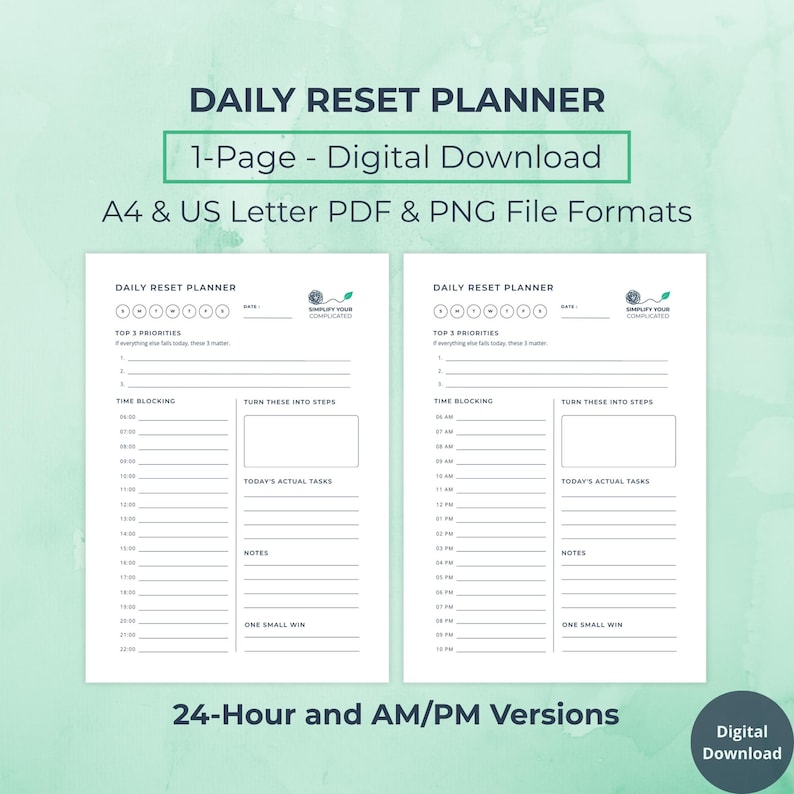
Hit Reset: Your Day, Your Rules
A simple daily planner isn't a magic wand, but it's arguably the closest thing to a "reset button" you have for your day. It empowers you to move from feeling reactive and overwhelmed to being proactive and in control. By dedicating a few minutes each day to thoughtful planning, you're not just organizing tasks; you're cultivating clarity, reducing stress, and intentionally shaping a life that feels more aligned with your values and goals.
So, why not give it a try? Pick a planner, dedicate 10 minutes tonight or tomorrow morning, and hit reset on your day. You might be surprised at the transformation.