
Reclaim Your Day: How a Simple Daily Reset Can Transform Your Routine

Ever feel like you're constantly playing catch-up, battling a never-ending tide of undone tasks, misplaced items, and mental clutter? You're not alone. In our fast-paced world, it's easy for small messes – both physical and mental – to accumulate, leaving us feeling overwhelmed, stressed, and less productive. But what if there was a simple, quick way to hit the reset button each day, transforming your routine and reclaiming your peace of mind?
Enter the Daily Reset. It's not about deep cleaning your entire house or overhauling your life in one go. Instead, it's a powerful, intentional practice of tidying up the loose ends of your day, making space for clarity, focus, and a smoother tomorrow. Let's dive into how this simple habit can become your secret weapon for a more organized, less stressful life.
What Exactly is a Daily Reset?
Think of a daily reset as a mini-maintenance routine for your life. It's a short, focused period (often 10-20 minutes) dedicated to putting things back in order at the end of your active day, or preparing for the day ahead. It addresses the immediate, visible clutter that accumulates from daily living, as well as the mental residue that can cloud your focus.
The goal isn't perfection, but rather progress and prevention. It's about ensuring you wake up to a cleaner slate, both literally and figuratively, or end your day feeling accomplished and prepared.
Why is a Daily Reset So Powerful?
The benefits of incorporating a daily reset into your routine are far-reaching, impacting everything from your stress levels to your productivity:
Reduces Overwhelm and Stress: Waking up to a tidy space or ending your day with a sense of completion significantly lowers stress. It eliminates the low-level anxiety that comes from a cluttered environment.
Improves Focus and Productivity: A clear physical space often leads to a clearer mind. When you're not distracted by visual clutter, your brain has more capacity to focus on important tasks.
Creates Positive Momentum: Starting or ending your day with a small win (like tidying up) builds momentum. It makes you feel capable and sets a positive tone for whatever comes next.
Enhances Sleep Quality: Going to bed with a tidy environment and a clear mind can lead to more restful sleep, as your brain isn't processing unfinished tasks or visual chaos.
Prevents Small Messes from Becoming Big Problems: A daily reset is like preventative maintenance. A few minutes each day stops minor disarray from snowballing into a daunting, hours-long task.
Fosters Mindfulness and Gratitude: The act of tidying can be a mindful practice, allowing you to appreciate your space and the items within it.
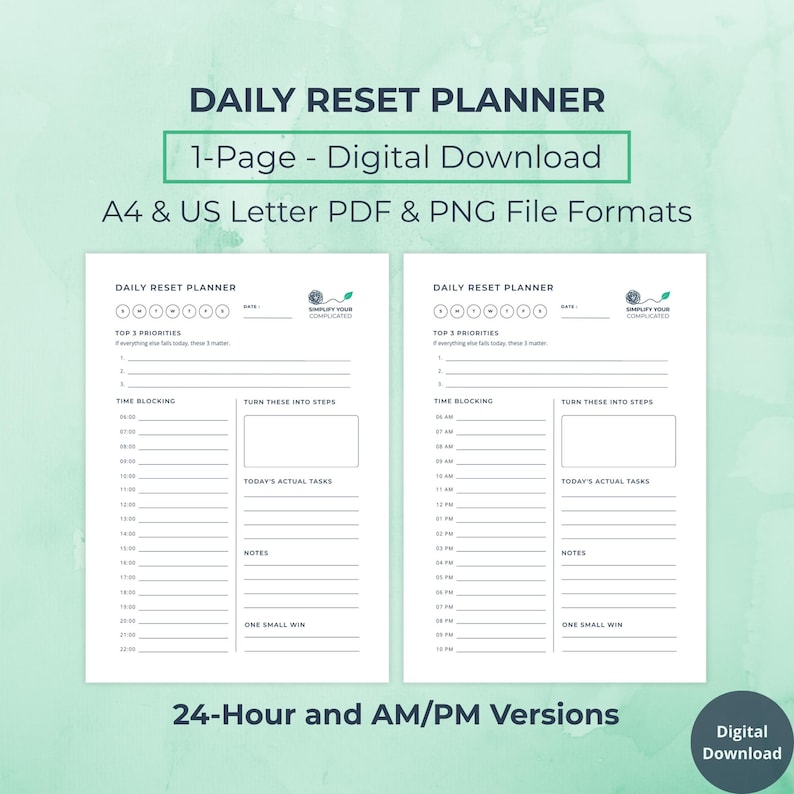
Components of an Effective Daily Reset
A truly transformative daily reset touches on three key areas: your physical space, your digital space, and your mental/emotional state. Here's how to tackle each:
1. Physical Space Reset
This is often the most visible and satisfying part of the reset. Focus on the areas you use most frequently.
Tidy Common Areas: Spend 5-10 minutes on high-traffic zones like the kitchen counter, living room, and your workspace. Put dishes in the dishwasher, wipe down surfaces, and fluff pillows.
"A Place for Everything": The golden rule of tidiness. Take a quick walk around and put items back where they belong. Books on the shelf, clothes in the hamper, shoes by the door.
Prepare for Tomorrow: Lay out clothes for the next day, pack lunches, set up the coffee maker, or gather items needed for work/school. This saves precious time and decision-making energy in the morning.
2. Digital Space Reset
Our digital lives can be just as cluttered as our physical ones, and often more insidious.
Close Unnecessary Tabs: Before shutting down your computer, close any tabs you won't need immediately tomorrow. Bookmark important ones.
Clear Your Desktop: Move files from your desktop into appropriate folders. A clean desktop makes it easier to find what you need.
Quick Email Triage: Spend a few minutes archiving, deleting, or flagging emails that need attention. Aim for a manageable inbox.
3. Mental/Emotional Reset
This is crucial for true peace of mind and often overlooked.
Brain Dump/Journaling: Jot down any lingering thoughts, worries, or to-dos that are circling in your mind. Getting them out of your head and onto paper (or a digital note) can be incredibly freeing.
Review Tomorrow's Priorities: Briefly look at your calendar or to-do list for the next day. Identify the 1-3 most important tasks you need to accomplish. This provides clarity and reduces morning anxiety.
Short Mindfulness/Gratitude Practice: Take 2-5 minutes to breathe deeply, reflect on something you're grateful for, or simply be present. This helps transition your mind from "doing" to "being."
"The daily reset is a small investment of time that pays huge dividends in peace of mind and productivity."
When to Do Your Daily Reset?
The beauty of the daily reset is its flexibility. You can choose the time that best suits your routine:
Evening Reset: Many find doing a reset in the evening (e.g., after dinner, before winding down for bed) most effective. It helps you relax, sleep better, and wake up to a fresh start. This is often the most recommended approach.
Morning Reset: If your evenings are too hectic, a short reset first thing in the morning (e.g., after breakfast, before starting work) can also be powerful. It sets a productive tone for the entire day.
The key is consistency. Choose a time when you can reliably dedicate 10-20 minutes without interruption.
Making it a Habit
Like any new habit, consistency is key. Here are some tips to make your daily reset stick:
Start Small: Don't try to do everything at once. Pick just one or two components (e.g., tidy the kitchen and clear your desktop) and gradually add more.
Set a Reminder: Use your phone, a smart speaker, or a visual cue (like a specific time on the clock) to prompt your reset.
Stack it with an Existing Habit: Link your reset to something you already do every day. For example, "After I finish dinner, I'll do my kitchen reset," or "Before I brush my teeth for bed, I'll clear my workspace."
Be Kind to Yourself: You won't be perfect every day. If you miss a reset, don't beat yourself up. Just pick it up again tomorrow. The goal is progress, not perfection.
Involve Your Household: If you live with others, explain the concept and encourage everyone to participate in their own daily reset, even if it's just putting away their own items.
Conclusion
A simple daily reset might seem like a small, insignificant habit, but its cumulative power is immense. It's an act of self-care, a commitment to clarity, and a proactive step towards a less stressful, more productive life. By dedicating a few mindful minutes each day to tidying your physical space, clearing your digital clutter, and calming your mind, you're not just organizing your surroundings – you're reclaiming your day, one reset at a time. Why not give it a try tonight?